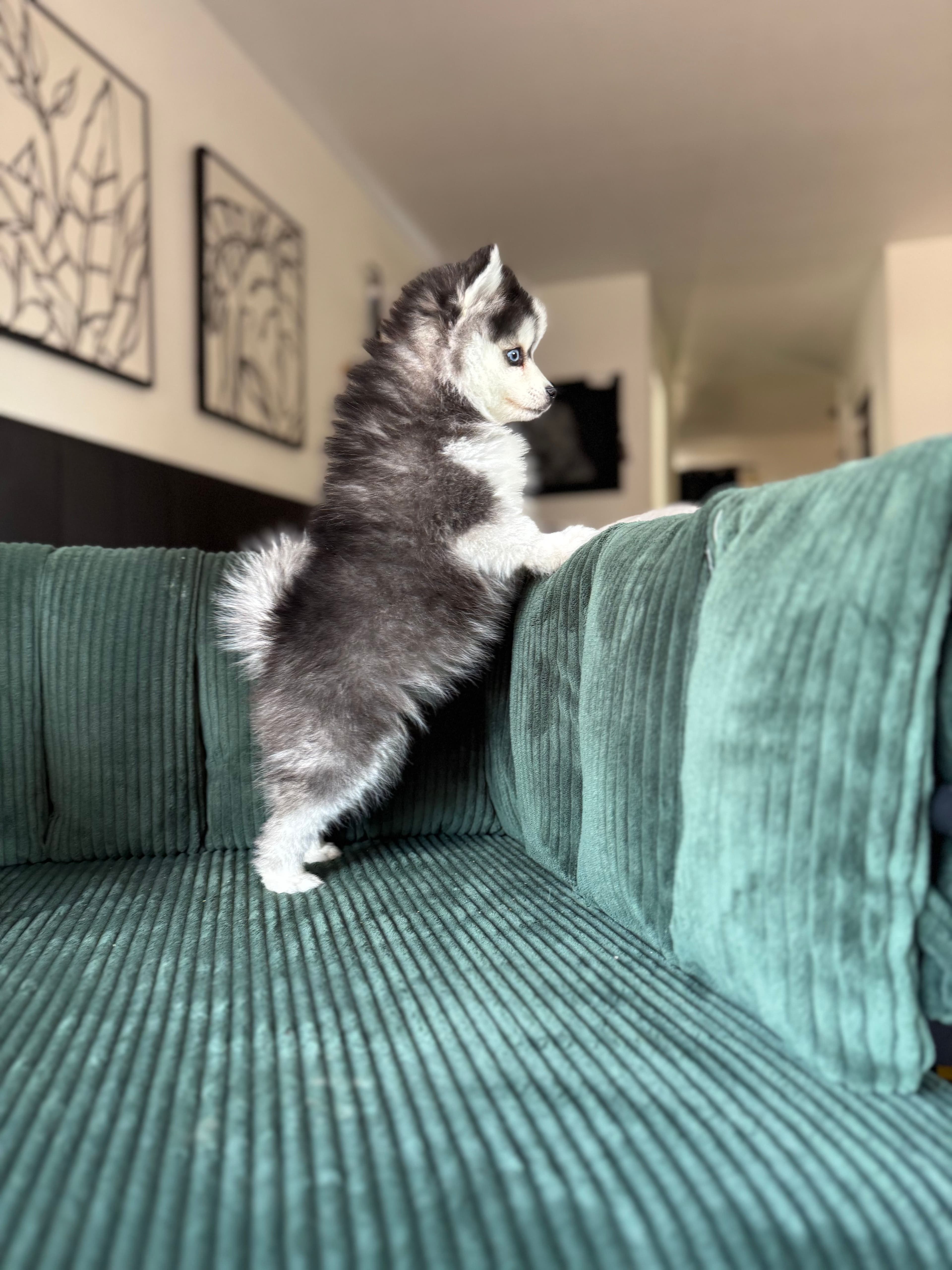
If you’ve ever wondered what a Pomsky is, you’re not alone. The Pomsky is a designer breed created by crossing a Siberian Husky with a Pomeranian, combining the striking look of a Husky with the smaller, more manageable size of a companion dog. With their plush coats, bright eyes, and playful personalities, Pomskies have quickly become one of the most sought-after modern breeds.
What Is a Pomsky and Where Did It Come From?
The Pomsky is intentionally bred from a female Siberian Husky and a male Pomeranian. Because of the size difference between the two breeds, this pairing is done through artificial insemination to ensure safety and consistency.
The breed first gained traction in the early 2010s as photos of “mini Husky” dogs began circulating online. Interest grew rapidly, and today Pomskies are supported by established organizations like the American Pomsky Kennel Club (APKC), which promotes responsible breeding practices. Platinum Pomskies owner Stephanie Elliott has served as President of the APKC for over 7 years, helping shape ethical breeding standards within the industry.
What Does “Pomsky” Mean?
The name “Pomsky” is simply a blend of Pomeranian and Husky. You may also see it spelled “Pomski,” but it refers to the same crossbreed.
Appearance and Size
Pomskies are known for their eye-catching appearance, often resembling a smaller version of a Siberian Husky. However, because they are a mixed breed, their look can vary from dog to dog.
- Size typically ranges from 10 to 30 pounds
- Height averages 10 to 15 inches
- Some lean more Husky-like, others more Pomeranian
Coat and Colors
Most Pomskies have a thick double coat that requires regular maintenance.
- Common coat types: standard, plush, and wooly
- Colors include black and white, gray, red, cream, sable, and merle
- Brushing several times a week helps manage shedding, especially seasonally
Personality and Temperament
Pomskies are intelligent, social, and full of personality.
- Affectionate and people-oriented
- Playful and energetic
- Can be vocal and expressive
- Occasionally stubborn, especially during training
Early socialization and consistent, positive training are key to raising a confident, well-balanced dog.
Training and Exercise Needs
Pomskies are not a low-effort breed—they thrive with engagement and structure.
- Daily walks and active play are essential
- Mental stimulation (training, puzzle toys) helps prevent boredom
- Respond best to reward-based, consistent training
Are Pomskies Good Pets?
Pomskies adapt well to many living situations, including apartments, as long as their physical and social needs are met. They bond closely with their families and do best in homes where they are included in daily life.
Health and Lifespan
Pomskies typically live between 12 and 15 years.
While mixed breeds can benefit from increased genetic diversity, health is still heavily influenced by responsible breeding. The most commonly seen concerns in Pomskies include:
- Patellar luxation (knee issues)
- Occasional hip concerns
Reputable breeders reduce risk through DNA testing and careful pairing of parent dogs.
Choosing a Pomsky Breeder
Not all Pomskies are bred the same. A responsible breeder should prioritize:
- Health testing and genetic screening
- Temperament and socialization
- Transparency and ongoing support
At Platinum Pomskies, each puppy is raised in a home environment with early neurological stimulation and intentional socialization. Our program is focused on producing healthy, well-adjusted Pomskies for families across Arizona, California, and beyond.
Final Thoughts
The Pomsky is a unique and engaging breed that offers the beauty of a Husky in a smaller, companion-friendly size. With the right expectations, proper training, and a responsible breeder, they make exceptional lifelong companions.